NDIS consumables fund everyday items that participants need directly because of an impairment. These supplies help with personal hygiene, communication, and home safety. Consumables are one part of your budget, so read what NDIS funds can be used for before you buy anything.
Key Takeaways
Consumables sit within Support Category 03 inside your flexible Core Supports budget.
Low-cost assistive technology items under $1,500 do not require quotes or prior NDIA sign-off.
Standard supermarket groceries, regular toiletries, and PBS medicines are excluded.
Self-managed and plan-managed participants can shop at ordinary retail stores and pharmacies.
Keeping itemised tax invoices protects you if your claims are reviewed.
How Does the NDIS Consumables Budget Work?
Your consumables money sits inside Core Supports under Support Category 03. For most participants, Core funding is flexible. You can use money originally set aside for everyday support workers to purchase needed personal care items instead.
This money cannot move into Capital Supports or Capacity Building. Consumables funding also does not roll over when your plan period ends. Any balance left unspent on your end date returns to the scheme.
The National Disability Insurance Agency relies on the reasonable and necessary criteria set under Section 34 of the National Disability Insurance Scheme Act 2013 to decide funding levels. Planners look at your functional reports and living circumstances to set your total amount.
The $1,500 Threshold for Low-Cost Assistive Technology
Low-cost assistive technology covers equipment priced up to $1,500 per item, including GST. You can buy low-risk items directly from this category without sending a formal quote to your planner. Examples include shower stools, grab rails, and non-slip bath mats.
Items with safety risks require professional input before purchase. Products like bed rails, bed poles, and pressure-relieving mattresses can cause injury if fitted improperly. For these goods, an occupational therapist must provide written advice confirming the item is safe for your body and home setup.
Assistive items that cost more than $1,500 fall into Capital Supports. These higher-cost purchases require a formal quote, an allied health assessment, and written NDIA approval before any purchase occurs. Splitting an expensive item into multiple payments under $1,500 breaches funding rules.
Purchasing Channels for Different Plan Management Types
How you pay for products depends on your plan management setup:
Self-managed: You buy directly from regular retail shops, chemists, or online suppliers. You pay with your own funds, then submit the tax invoice through the myNDIS portal to get reimbursed.
Plan-managed: You can buy from registered or unregistered sellers across Victoria, Queensland, Western Australia, and the Northern Territory. The seller sends the invoice straight to your plan manager, who pays the bill from your plan.
Agency-managed: You must buy only from registered NDIS providers. The provider logs into the NDIS portal to create a service booking and claim payment directly.
Approved Categories of NDIS Consumables
The scheme funds items tied to specific functional needs. These cover continence care, skin management, nutritional feeding, home tools, and sensory regulation.
Continence Aids and Hygiene Products
Continence supplies make up a large portion of consumables spending across Australia. Funded products include pads, pull-up pants, washable bed pads, external catheters, urine drainage bags, and cleansing wipes. These items support participants dealing with bladder or bowel changes caused by spinal conditions, neurological conditions, or physical impairments.
Wound Care and Skin Integrity Supplies
Wound supplies include specialized dressings, retention tapes, and barrier ointments needed to prevent skin breakdown. These items apply to participants with reduced mobility, spinal injuries, or sensory loss that increases the risk of pressure sores.
Home Enteral Nutrition (HEN)
Home Enteral Nutrition covers clinical formula feeds, giving sets, syringes, and feeding lines. These supplies help individuals who cannot get adequate nutrition through standard meals due to physical or cognitive conditions. The NDIS covers formula feeds and administration equipment beyond state-based supply caps.
Low-Cost Assistive Daily Living Equipment
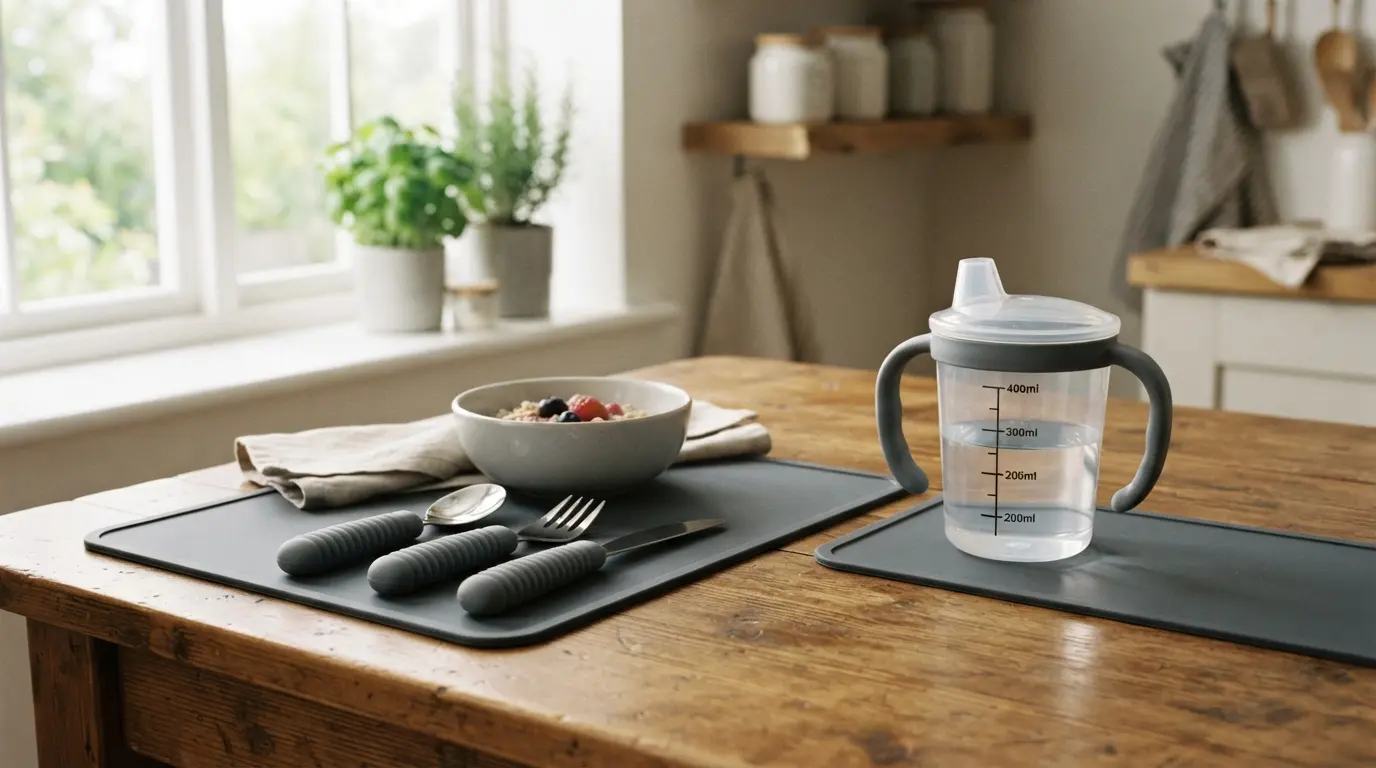
Adaptive aids help people prepare meals and carry out personal care independently. Typical examples include angled spoons, non-spill cups, plate guards, button hooks, and reacher tools.
Sensory and Psychosocial Regulation Items
For neurodivergent children and adults who need help staying calm and focused, sensory tools can be funded. Common purchases include visual countdown timers, weighted lap pads, and textured hand fidgets.
What Purchases Are Excluded From Consumables?
The scheme does not pay for general household costs that all Australians cover out of pocket:
Everyday groceries: Standard food, regular shampoo, bar soaps, regular toilet paper, and household cleaning products are excluded.
Clinical medicines: Prescription drugs, over-the-counter vitamins, and pain relief medicines belong under Medicare and the Pharmaceutical Benefits Scheme.
Nappies for young children: Disposable nappies, standard wipes, and pull-ups for children under five are standard parental costs. They qualify only when medical records prove a child's needs far exceed those of other children their age.
Mainstream electronics: Standard tablets, smartwatches, and smart home speakers are consumer electronics. A basic tablet is funded only when prescribed for Augmentative and Alternative Communication (AAC), or when approved as a replacement support that costs less than dedicated assistive technology.
Evidence, Receipts, and Audit Compliance
Good record-keeping protects participants if claims are reviewed. The NDIS Amendment Integrity and Safeguarding Act places scrutiny on whether purchases match funding guidelines. Keep clear tax invoices showing the seller's business details, the item name, the date, and the total cost.
Certain categories require clinical paperwork on file before you make purchases:
Continence items: Require an assessment from a continence nurse or occupational therapist detailing daily product quantities, usually updated on a three-year cycle.
Home Enteral Nutrition: Requires written feeding plans and product specifications from a dietitian or speech pathologist.
Complex daily aids: Benefit from a Functional Capacity Assessment showing why a specific piece of equipment is necessary for your independence at home.
Managing Your Consumables Budget Across Australia
Participants in regional Western Australia and the Northern Territory frequently face steep shipping costs for bulky care items. Delivery fees tied directly to eligible disability supplies can be paid from your consumables allocation where appropriate.
If your needs increase because your condition changes, the NDIA will not cover spending that exceeds your allocated budget. You must pay shortfalls yourself unless your funding changes.
When your support needs permanently increase, collect updated assessment letters from your doctor and allied health clinicians to request an unscheduled plan reassessment. If you need help with everyday tasks at home, our daily living support service can talk through your options.
Frequently asked questions
Can I spend my consumables budget without prior NDIA approval?
Yes. You can buy low-risk personal aids and daily items under $1,500 without submitting quotes or waiting for approval, provided the item relates directly to your disability.
What should I do if my consumables budget runs out early?
Check whether you have flexible funds left in other Core support areas to cover the difference. If all Core funds are spent and your care needs have grown, request an unscheduled plan reassessment backed by current medical evidence.
Does the NDIS cover baby wipes and pull-ups for young children?
Standard nappies and wipes for children under five are parental expenses. The NDIS covers these products only when a diagnosed disability causes continence needs well beyond typical childhood milestones.
Can I purchase an iPad using my consumables budget?
Standard consumer tablets are excluded from ordinary consumables spending. A tablet can be funded only when an allied health clinician prescribes it as an Augmentative and Alternative Communication tool, or if the NDIA approves it as a replacement support.
Strengthen Your Daily Living Supports
Managing plan rules and arranging your supplies is simpler with practical guidance on your side.
Related Articles

How to Hire and Choose the Right NDIS Support Worker
A disability support worker assists you with daily living, personal care, and getting out into your local area under the National Disability Insurance...

Understanding NDIS Short Term Accommodation and Respite Rules
Understand how NDIS short term accommodation funding works, check your eligibility rules, and discover how to book planned respite stays.

Specialist Support Coordination for Complex Mental Health Needs
When mental health challenges become overwhelming, specialist support coordination brings clinical expertise and stability to your NDIS plan.